
What Is a Webtoon? Origins, History & How They Changed Comics

By The Desk
 Oct 7, 2026

Webtoons have quietly become one of the biggest entertainment formats on the planet, boasting over 180 million monthly readers, multiple Netflix adaptations, and a multi-billion-dollar industry. Yet many people still ask: What actually is a webtoon? And how long is webtoon history?
A webtoon is a digital comic that originated in South Korea, specifically designed to be read by scrolling vertically on smartphones. Unlike traditional comics or manga, webtoons are usually full-color, episodic, and optimized for mobile consumption, with the first few episodes almost always free to read — and if you want to experience that firsthand, you can Sign up on HoneyToon and dive into hundreds of series in just a few taps.
This article explores the complete story — from their humble beginnings during South Korea’s financial crisis in the late 1990s to becoming a global cultural phenomenon that has revolutionized how millions of people consume comics today. Whether you’re new to webtoons or want to understand their massive impact, you’ll find everything you need right here.
What Is a Webtoon Definition
The term webtoon comes from combining “web” + “cartoon”. It was coined around the year 2000 by Chollian, one of South Korea’s early internet portals. In simple terms, the webtoon meaning is an episodic digital comic created specifically for mobile reading.
The webtoon format is quite unique — it uses a long vertical scrolling layout (infinite canvas) instead of traditional pages. This makes it perfect for reading on phones. Webtoons are typically full-color, released weekly, and allow readers to start for free, with optional paid episodes later.
Many webtoons also feature sound effects, background music, and subtle animations, creating a more immersive experience than classic comics.
Note: “webtoon” refers to the format, while WEBTOON is the name of the popular platform by Naver.
Where Did Webtoons Come From? The Origins Story
The Crisis That Killed Korean Comics (1997–2000)
The story of webtoon origins begins not with success, but with total collapse.
In 1997, the Asian Financial Crisis devastated South Korea. The once-thriving print manhwa industry was hit hardest. Rental shops — the main way Koreans consumed comics — went bankrupt as people could no longer afford even basic luxuries. The number of published manhwa titles plummeted from over 200,000 to barely 20,000 in just a few years.
To make matters worse, in 1998 the Korean government lifted its long-standing ban on Japanese media. Suddenly, high-quality manga flooded the market, becoming a fierce competitor. At the same time, high-speed internet was rolling out across the country. Fans began scanning and sharing comics online for free, which accelerated the collapse of physical rental stores.
Out of this chaos, something unexpected was born. Unemployed artists and writers, with nowhere else to go, started posting their original stories online — not for money, but as a creative outlet and a way to survive.
This dark period in the history of webtoons South Korea became the unlikely birthplace of a new medium that would eventually take over the world.
The First Webtoons (2000–2003)
Out of the ashes of the collapsed print industry, the very first webtoons began to emerge.
In August 2000, the Korean internet portal Chollian officially launched the first dedicated webtoon section and introduced the now-iconic vertical scrolling layout. This moment is widely considered the official birth of the webtoon format.
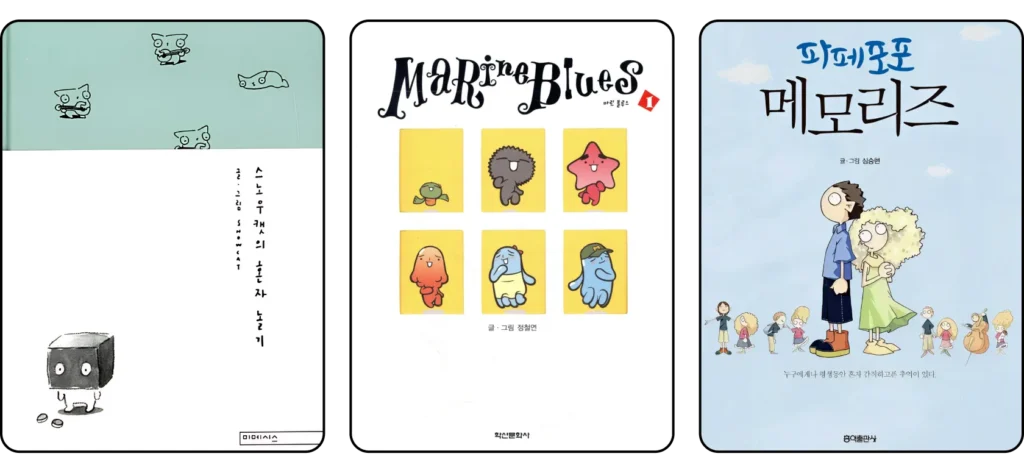
The earliest webtoons were raw, experimental, and deeply personal. Titles like Snowcat, Marine Blues, and Pape Popo gained popularity as self-published slice-of-life stories. They were simple, humorous, and spoke directly to the everyday struggles of young Koreans.
Several startups, such as N4 and Comic Plus, attempted to create paid online comic platforms, but readers — still recovering from the economic crisis — weren’t ready to pay. What succeeded instead was the freedom of the format: completely free, instantly accessible, and made for the rapidly growing number of internet users.
These early experiments laid the foundation for everything that followed.
Daum & Naver Turn Webtoons into Big Business (2003–2010)
The real breakthrough came when major internet portals recognized the potential of webtoons.
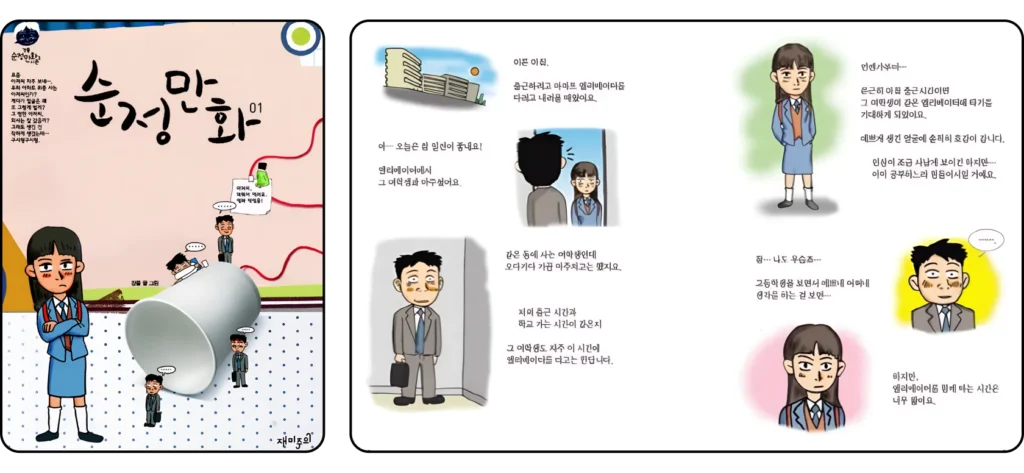
In 2003, Daum began actively recruiting professional cartoonists. That same year, artist Kang Full released Love Story, a heartfelt and emotionally raw romance that exploded in popularity. It became one of the first true webtoon sensations, proving that the format could deliver serious storytelling and massive audiences.
In 2004, Naver officially launched its own webtoon service — Naver Webtoon. The fierce competition between Daum and Naver sparked a golden age for the medium. Both platforms started investing heavily in creators, offering better pay, professional editing, and consistent schedules.
Webtoons quickly evolved from hobby projects into high-quality, professionally produced series. The portals cleverly used them as powerful traffic magnets — keeping users on their sites for hours. The strategy worked exceptionally well. By the late 2000s, webtoons had transformed from a niche experiment into a serious, profitable business.
Smartphones & Snack Culture Fuel the Boom (2010–2014)
The smartphone revolution supercharged webtoons into a mainstream phenomenon.
By 2013, South Korea had achieved 67% smartphone penetration, a number that would climb to 95% by 2019. The vertical scrolling webtoon format turned out to be ideally suited for phones — readers could enjoy smooth, endless scrolling with just one hand.
This era also saw the rise of “snack culture” — the habit of consuming short, satisfying bursts of entertainment in 10–15 minutes. Webtoons were perfect for this: quick to read during commutes, lunch breaks, or before sleep.
As a result, genres expanded dramatically beyond simple slice-of-life stories into action, fantasy, thriller, horror, and romance content.
This perfect alignment between technology, lifestyle, and storytelling is one of the main reasons Korean digital comics (webtoons) became so incredibly popular.
How Webtoons Went Global
LINE Webtoon and the International Launch (2014)
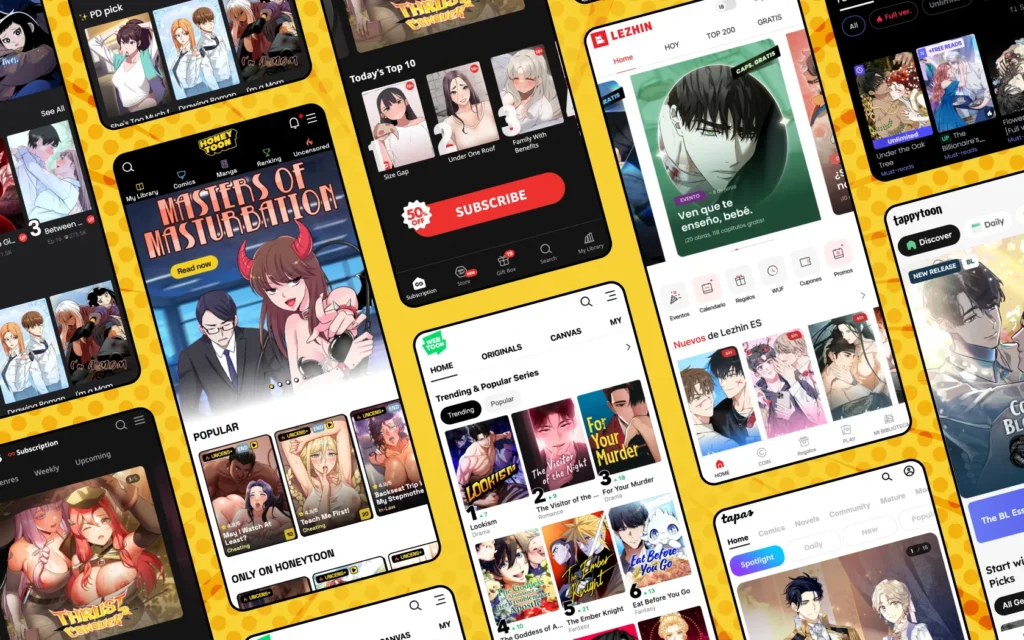
In 2014, Naver made a bold move by rebranding its service as LINE Webtoon for international audiences. The platform launched in English along with translations into Spanish, French, German, and other languages. By offering the first episodes free and using a coin system for premium chapters, LINE Webtoon successfully lowered the barrier for global readers and quickly gained massive traction.
The K-Wave Connection
The global rise of webtoons was perfectly timed with the Hallyu Wave (Korean cultural wave). As K-pop and K-dramas captured the world’s attention, millions became curious about Korean storytelling. Webtoons benefited enormously from this. Major adaptations such as Tower of God, Sweet Home, Itaewon Class, All of Us Are Dead, and Solo Leveling brought webtoons to an even wider audience. By 2021, over 21 webtoon-based series had aired globally on Netflix and other platforms.
Platform Wars & Industry Consolidation
As demand exploded, the competition intensified. Naver acquired Wattpad ($60M), while Kakao bought Tapas and Radish ($95M). Today, readers have many choices among the best webtoon platforms in 2026, including WEBTOON (Naver), Tapas, Tappytoon, Lezhin, Toomics, Manta, and Honeytoon.
As of 2023, Naver Webtoon alone boasts over 180 million monthly active users, and the global webtoon industry is valued at nearly $6 billion.
Webtoon vs. Manga vs. Manhwa — What’s the Difference?
| Feature | Webtoon | Manga | Manhwa |
| Origin | South Korea | Japan | South Korea |
| Format | Vertical scroll, digital-first | Pages, print-first | Pages (print) or vertical scroll (digital) |
| Color | Full color | Mostly black & white | Varies |
| Reading direction | Top to bottom | Right to left | Left to right |
| Distribution | Digital platforms, free + freemium | Print volumes, digital | Print or digital |
| Episode length | ~50–80 panels, weekly | ~18–20 pages, weekly/monthly | Varies |
Explanation:
When people ask about webtoons vs manga, the biggest differences are format and style. Manga is traditionally black-and-white and read horizontally, while webtoons are full-color and designed for vertical scrolling on phones.
The Webtoon vs manhwa difference is more subtle. “Manhwa” is simply the Korean word for comics in general. A webtoon is a specific type of digital manhwa — optimized for mobile with vertical format and full color. Not all manhwa are webtoons, but nearly all Korean webtoons are technically manhwa.
How to Start Reading Webtoons Today
Starting with webtoons is simple and beginner-friendly. Pick a platform that matches your taste. The best webtoon platforms 2026 include WEBTOON (biggest overall library), Tapas, Tappytoon, Lezhin, Manta, and Honeytoon.
Browse by genre — romance, action, fantasy, drama, horror, or slice-of-life. Most series offer the first few episodes for free, so you can test many titles without spending money. Webtoons work directly in your browser (no app required), though mobile apps for iOS and Android provide push notifications and smoother reading.
Once you find something you like, follow the series to get updates when new episodes drop.
Recommended for the newbie:
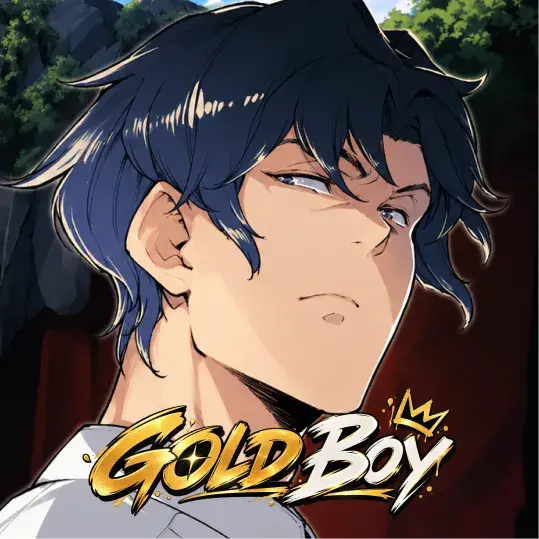
- Gold Boy (Drama)
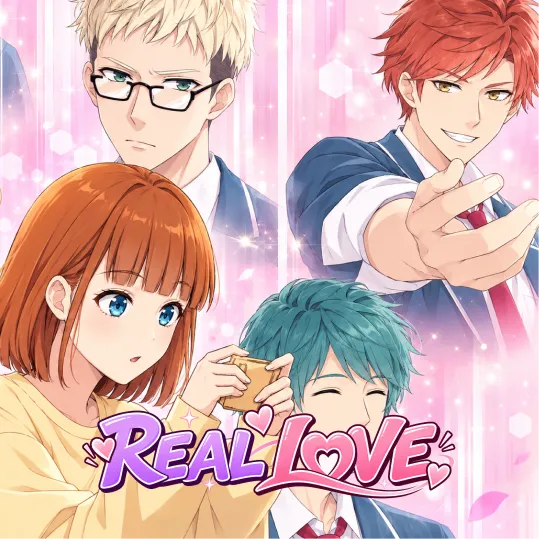
- Real love! (Romance)
- The Ultimate All-Rounder (Action)

That’s it! Now you know what a webtoon is and how it works — Alright, it’s time to dive into reading!


We keep diving deeper behind the scenes of Honeytoon.
The next guest is coming very soon. Get your popcorn ready!